Health and Safety Policy for Rubbish Removals
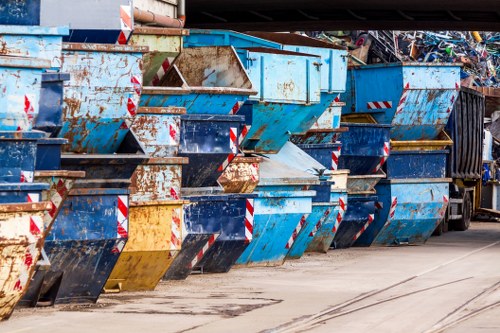 Purpose and commitment. This Health and Safety policy sets out the responsibilities and standards for all staff, contractors and operatives involved in rubbish removals, refuse removal and general waste collection activities. Our aim is to ensure a safe working environment, reduce risks from manual handling, vehicle operations and site work, and promote a culture of risk awareness across every waste removal task. The policy applies to all aspects of waste and rubbish clearance operations including domestic clearances, commercial waste pickup and site-specific removals.
We commit to providing adequate resources, training and supervision so that every team member understands and follows safe systems of work. This policy complements operational procedures for waste disposal, skips handling and bulky waste collection, but does not replace detailed task-specific assessments. Managers must ensure that health and safety considerations are integrated into daily planning and that staff are empowered to stop work if unsafe conditions arise.
 Scope and definitions. For the purposes of this document, rubbish removal services includes all activities associated with collection, sorting, transport and disposal of waste, including hazardous or potentially hazardous items. The policy covers vehicle driving duties, loading and unloading of waste, use of lifting equipment, traffic management during roadside operations and safe handling of sharps, chemicals or asbestos-containing materials when encountered. Contractors engaged to support our operations must adopt equivalent safety standards and provide evidence of competence.
Responsibilities
Management will establish, maintain and review safety arrangements, appoint competent supervisors and ensure emergency procedures are in place. Managers are responsible for risk assessments, ensuring suitable PPE is supplied and maintained, and that records of training, licenses and medical checks are kept where required.Supervisors and team leaders must ensure safe systems of work are communicated and followed. They will carry out routine checks of equipment, vehicles and crew welfare, and report any incidents or near-misses promptly so corrective action can be taken. Supervisors should maintain clear communication channels between crews and office staff, especially during complex clearances or hazardous finds.
Operatives
All operatives must follow safe manual handling techniques, wear required PPE, use mechanical aids where provided and take part in training. Workers must declare any medical conditions that may affect their ability to perform duties safely, report hazards and follow incident reporting procedures. It is a duty to refuse tasks that present imminent risk until a safe method is agreed.![A large pile of construction and renovation waste materials situated on a dirt surface in an outdoor setting. The pile includes white plastic debris, such as insulation or packaging, along with broken pieces of drywall or plasterboard, some with rough edges and exposed surfaces. There are also fragments of wood and other construction refuse scattered around the base of the pile. In the background, a low brick wall and a distant street scene with buildings, trees, and streetlights are visible under a cloudy sky, indicating an urban environment. The waste appears to have been recently discarded, likely as part of a rubbish removal service by Rubbish Removals, serving local areas, possibly near [POSTCODE] or in [TOWN]. The scene emphasizes the type of debris encountered in building renovation or clearance projects, highlighting the importance of proper disposal and professional rubbish removal solutions in the locality.](/pub/_photos/rubbish/f1340932096.jpg) Risk assessment and control measures. Risk assessments are central to safe rubbish collection. Typical hazards include slips, trips and falls, exposure to biological hazards, sharps, hazardous substances, vehicle movements and manual handling injuries. Control measures include:
Risk assessment and control measures. Risk assessments are central to safe rubbish collection. Typical hazards include slips, trips and falls, exposure to biological hazards, sharps, hazardous substances, vehicle movements and manual handling injuries. Control measures include:
- Pre-task planning: site appraisal, vehicle positioning and traffic control.
- PPE: gloves, high-visibility clothing, eye protection and safety boots appropriate to the job.
- Manual handling controls: team lifts, mechanical aids, trolleys and cages for heavy loads.
- Vehicle safety: daily checks, secure loading, reversing alarms and competent drivers.
- Contamination controls: safe segregation of waste streams and spill response kits.
Control measures must be proportionate to the identified risks and reviewed when circumstances change. Near-miss reports and incident investigations should inform continuous improvement. Strong supervision and updated risk assessments prior to unusual clearances reduce the likelihood of harm.
![A metal rubbish bin with a closed lid, situated on a dark, textured surface, filled with various discarded plastic bottles, cans, and a small globe depicting Earth with visible landmasses and oceans, along with crumpled paper and other waste materials. The background appears to be a shadowy, industrial-style wall, emphasizing the contrast between the waste contents and the environment. The plastic bottles show different colors such as clear, green, and blue, with some partially crushed or crumpled, while the metallic surface of the bin reflects subtle light. This image highlights waste disposal and environmental concerns, aligning with rubbish removal services in the area around [POSTCODE] and [TOWN], as represented by Rubbish Removals, illustrating the importance of proper waste management in a professional context.](/pub/_photos/rubbish/f1868001784.jpg) Training, competence and wellbeing. Effective training and verification of competence are essential for safe waste removal work. Training topics include manual handling, vehicle safety, hazardous waste awareness, first aid and use of PPE. Regular refresher training and toolbox talks help maintain awareness. Staff wellbeing is supported through reasonable workloads, rest breaks and access to welfare facilities during extended operations.
Training, competence and wellbeing. Effective training and verification of competence are essential for safe waste removal work. Training topics include manual handling, vehicle safety, hazardous waste awareness, first aid and use of PPE. Regular refresher training and toolbox talks help maintain awareness. Staff wellbeing is supported through reasonable workloads, rest breaks and access to welfare facilities during extended operations.
Incident management and reporting. All incidents, injuries and near-misses must be reported immediately. The organisation will investigate incidents to establish root causes, implement corrective measures and share lessons learned across teams. Emergency procedures for fire, major spill, medical emergency or discovery of dangerous materials must be clear, practiced and accessible to all employees.
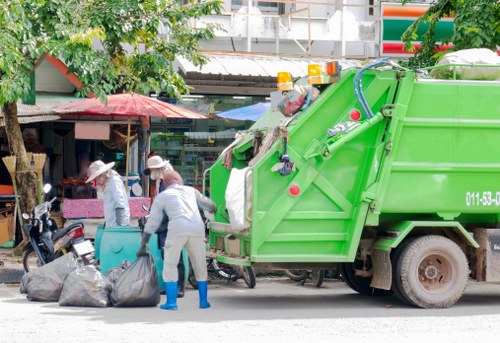 Monitoring and review. The effectiveness of this health and safety policy for rubbish removal operations will be monitored through regular audits, site inspections and performance reviews. Key performance indicators include incident rates, completion of planned maintenance, training uptake and audit findings. Senior management will review the policy at defined intervals or following significant incidents to ensure it remains relevant and effective.
Conclusion: By maintaining robust safety arrangements, providing clear responsibilities and ensuring ongoing training and monitoring, we aim to deliver safe, reliable and compliant rubbish removal, waste collection and clearance services. Everyone involved in these operations shares responsibility for safety and must play an active role in preventing harm.